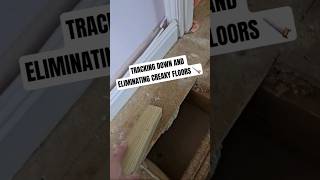
DIY Fix for a Squeaky Floor | Ask This Old House, by This Old House on YouTube. 9 min 9 s.
- Video length
- 9 min 9 s
- Time to do it
- 30 minutes
- Difficulty
- Easy
- Steps
- 8
What you need
Steps
Walk slowly over the floor and press down with your foot to pinpoint each squeak. Mark every noisy spot with a pencil or a strip of tape.
Find the joist under the squeak. Use the kit's finder bit through the floor, or tap and listen, or check from below in a basement.
Measure and mark the joist line on the floor so you know where to drive each screw.
Drill a pilot hole at the squeak, straight down into the joist, using the bit that matches your kit.
Drive a breakaway screw into the hole with the drill until the head snaps off just below the surface.
Add a second screw a few inches along the same joist if the squeak continues. Test by stepping on the spot.
For gaps between boards, tap thin wood shims into the gap with a hammer and snap off the excess.
Fill the small screw holes with wood floor repair crayon in a matching color, then buff with a rag.
Tips and common mistakes
Always drill a pilot hole first so you do not split the board or snap the screw above the surface.
Screw into the joist, not just the subfloor, or the squeak will come back.
On carpet, the breakaway screw head leaves only a tiny hole you can fluff back with your fingers.
Check for pipes and wires under the floor before driving long screws near walls or bathrooms.
Questions
Will this work on carpeted floors?
Yes. The breakaway screws are designed to snap off below the surface, so they leave only a small hole in the carpet that you can brush back over.
What if I cannot find the joist?
Use the finder bit from the kit or look at the floor from the basement or crawlspace to see which way the joists run and where they sit.
Do I need the special kit or can I use normal screws?
Normal screws leave heads sticking up and can split the board. The kit's breakaway screws snap off cleanly below the surface, which is why they are used.
This guide was drafted from the video's details and general task knowledge. It has not been checked against the full video. Check the video and relevant product instructions before following a procedure. Report a correction.