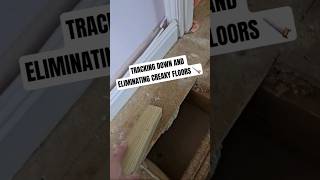
How to Repair Squeaky Floors Through Carpeting | This Old House, by This Old House on YouTube. 4 min 11 s.
- Video length
- 4 min 11 s
- Time to do it
- 30 minutes
- Difficulty
- Easy
- Steps
- 8
What you need
Steps
Find the exact spot that squeaks by walking slowly over the carpet and pressing down with your foot until you hear the noise.
Locate the floor joists under the carpet. Tap with a hammer and listen for the solid, dull sound, or use a stud finder set to deep scan.
Mark the joist lines on the carpet with a pencil or a strip of tape so you know where to drive the screws.
Load a break-off screw into the alignment tool from the kit and set the tip on the carpet directly over a joist.
Drive the screw down with your drill until the screw head snaps off at the scored line, leaving it just below the carpet surface.
Repeat along the joist every 6 to 8 inches around the squeak, adding screws until the noise stops.
Press down and walk over the area to check the squeak is gone, then add more screws if any noise remains.
Vacuum the carpet to lift the pile where the tool pressed in, and check no screw heads poke through.
Tips and common mistakes
Drive screws only over joists. A screw into open subfloor will not stop the squeak and can work loose.
Keep the break-off screws slightly below the carpet surface so bare feet and vacuum cleaners never catch them.
If the squeak is over a wide area, add screws on both sides of the joist for a firmer hold.
Wear safety glasses when driving screws and snapping heads, since the tips can fly off.
Questions
Will the screws damage my carpet?
The alignment tool pushes the pile aside and the heads break off below the surface, so the marks usually disappear after a vacuum. Deep-pile carpets hide them best.
What if I cannot find the joists?
Tap with a hammer and listen for the solid sound, or use a stud finder with a deep setting. Joists usually run in one direction, spaced about 16 inches apart.
Can I use this on hardwood floors?
No. This method is for carpet over wood subfloor. On exposed hardwood, use countersunk finishing nails or screws and fill the holes.
This guide was drafted from the video's details and general task knowledge. It has not been checked against the full video. Check the video and relevant product instructions before following a procedure. Report a correction.