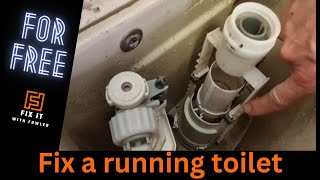
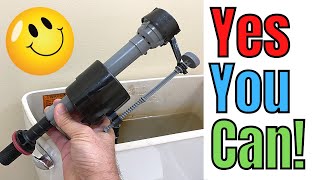
How to Fix a Running Toilet - 3 Most Common Problems, by House In Progress on YouTube. 5 min 9 s.
- Video length
- 5 min 9 s
- Time to do it
- 30 minutes
- Difficulty
- Easy
- Steps
- 9
What you need
Steps
Shut off the water supply valve behind or below the toilet and flush to empty the tank. Soak up the remaining water with a sponge and towel.
Lift the tank lid off and set it somewhere safe. Look at the flapper, the rubber seal at the bottom of the tank, and check for cracks, warping or a poor seal.
If the flapper looks worn, unhook the chain from the flush lever, slide the flapper off its pegs and fit a new one of the same size. Reattach the chain with a little slack.
Check the chain. If it is caught between the flapper and the tank bottom or hangs too loose, shorten it or clip the end to the flush lever clip so it does not snag.
Turn the water back on and watch the tank fill. If water keeps flowing into the overflow tube, the float is set too high.
For a float cup valve, turn the adjustment screw or slide the cup down to lower the water level. For a float ball on an arm, bend the arm down or turn the screw to lower the ball.
Flush and listen. If water still runs after the tank fills, the fill valve is likely worn. Shut off the water and drain the tank again.
Remove the old fill valve: undo the supply line, loosen the nut under the tank and lift the valve out. Fit the new valve, tighten the nut and reconnect the supply line.
Set the new fill valve height so the water line sits about an inch below the top of the overflow tube. Turn the water on, let the tank fill and check for leaks around the nut.
Tips and common mistakes
Bring the old flapper to the store or note your toilet brand and size so the new one fits.
Never overtighten the plastic nut on a fill valve or it can crack the tank.
Check the water level mark inside the tank and match it rather than guessing.
If the toilet still runs after all three fixes, check the overflow tube height and the seal at the tank bottom.
Questions
How do I know which of the three problems I have?
Watch the tank after a flush. Water trickling into the bowl points to the flapper. Water flowing into the overflow tube points to the float. Constant noise after the tank is full points to the fill valve.
Do I need to turn the water off to replace a flapper?
Yes. Shut the supply valve and flush to empty the tank first, then sponge out the rest so you can work dry.
How much does this repair cost?
A flapper is usually a few dollars and a fill valve costs a bit more. Doing it yourself avoids a plumber call-out fee.
This guide was drafted from the video's details and general task knowledge. It has not been checked against the full video. Check the video and relevant product instructions before following a procedure. Report a correction.