Work out why one radiator stays cold and fix it yourself, from trapped air to a stuck valve or sludge. It suits any homeowner with a gas or oil central heating system and basic DIY tools. You only need a bleed key, an adjustable spanner and a few old towels.
YouTube video: How to Fix a Cold Radiator 4 Easy Ways | DIY Plumbing
YouTube’s video details do not confirm captions. Check CC in the player for available tracks.
- Video length
- 11 min 52 s
- Time to do it
- 30 minutes
- Difficulty
- Easy
- Steps
- 8
What you need
Steps
Turn the heating on and feel the radiator at the top, middle and bottom. Note whether it is cold all over, cold at the top or cold at the bottom. That tells you which fix to try.
If the top is cold and the bottom warm, air is trapped. Fit a bleed key over the square bleed valve at the top corner and turn it anticlockwise about a quarter turn.
Hold a cloth under the valve and let the air hiss out. Close the valve as soon as steady water dribbles out, not before. Repeat on the other radiators.
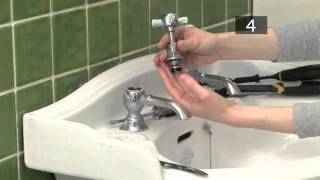
If the radiator stays cold with the heating on, check the thermostatic valve. Pull off the plastic head and press the small pin in the centre with a screwdriver. It should spring back.
If the pin is stuck, wiggle it free with the screwdriver. If it will not move, the valve needs replacing. Refit the head and set the valve to maximum.
Check both valves at the ends of the radiator are open. A radiator that is hot at the top and cold at the bottom is full of sludge and needs a flush, not bleeding.
If only one radiator is cold and it sits far from the boiler, balance the system. Open its lockshield valve fully, then partly close the valves on radiators that heat up fastest, a quarter turn at a time.
Look at the boiler pressure gauge and top up to between 1 and 1.5 bar if it has dropped. Low pressure can leave upstairs radiators cold.
Tips and common mistakes
Bleed radiators with the heating off and the water cool, so you avoid scalds and the pump does not pull more air in.
Radiator water is black and stains badly, so keep old towels under the valve and wear gloves.
Bleeding drops the system pressure, so check the boiler gauge afterwards and top it up if needed.
Do not open the bleed valve fully or it will keep running; a quarter turn is plenty.
Questions
Why is only one radiator cold when the rest are hot?
Usually a stuck pin in the thermostatic valve, a closed valve at one end, or the system being out of balance. Check the pin and both valves first before thinking about a flush.
How do I know if a radiator needs bleeding or flushing?
Cold at the top with warmth at the bottom means trapped air, so bleed it. Hot at the top and cold at the bottom means sludge, which needs a chemical clean or power flush.
Do I need to turn the heating off to bleed a radiator?
Yes. Let the system cool first so the water cannot scald you, and so the pump is not running while air is drawn in.
The notes are drafted automatically from video details and general task knowledge. How the guide was prepared
Report a correction