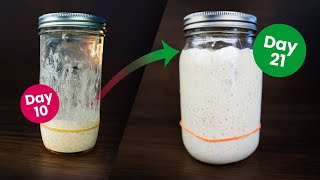
Feeding a sourdough starter keeps the yeast and bacteria active so your bread rises well. This guide suits beginners who already have a starter going. You need flour, water, a scale or measuring cups, and a clean jar.
YouTube video: How to Feed Your Sourdough Starter | 1:1:1
YouTube’s video details do not confirm captions. Check CC in the player for available tracks.
Other videos for this task
- How to feed a sourdough starter with the 1:1:1 ratio 4:39 · 8 written steps
- How to feed a sourdough starter with a 1:1:1 ratio 1:18 · 7 written steps
- Video length
- 1 min 54 s
- Time to do it
- 10 minutes
- Difficulty
- Easy
- Steps
- 7
What you need
Steps
Take your starter out of the fridge and let it come to room temperature if it was chilled.
Pour out most of the old starter, leaving a small amount in the jar as the base for the new feed.
Add equal parts flour and water to the leftover starter. A 1:1:1 feed means one part starter, one part flour and one part water.
Stir well until no dry flour remains and the mixture looks smooth and thick.
Scrape down the sides of the jar and cover it loosely with a lid or cloth.
Leave the starter at room temperature until it doubles in size and looks bubbly, usually a few hours.
Feed it again on the same schedule, or store it in the fridge if you are not baking soon.
Tips and common mistakes
Use room temperature water, since cold water slows down the rise.
Keep the jar loosely covered so gas can escape but dust stays out.
If a dark liquid forms on top, it is likely hunger and a sign to feed more often.
Questions
What does 1:1:1 mean for a sourdough starter?
It means equal parts by weight of starter, flour and water. For example, 50 g starter, 50 g flour and 50 g water.
How often should I feed my starter?
Feed it once a day if you keep it at room temperature. If you store it in the fridge, feed it about once a week.
How do I know the starter is ready to use?
It should look bubbly and doubled in size, and a spoonful should float in water.
The notes are drafted automatically from video details and general task knowledge. How the guide was prepared
Report a correction