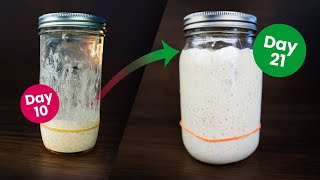
Keep a sourdough starter alive and ready for baking. You will learn how to feed it, judge when it is active enough to use, store it and fix common problems. It suits beginners who have or can get a starter and a digital scale.
YouTube video: Sourdough Starter: How to Feed It, Use It, Fix It, and Keep It Strong
YouTube’s video details do not confirm captions. Check CC in the player for available tracks.
Choose a chapter (13)
- Video length
- 21 min 54 s
- Time to do it
- 10 minutes per feeding
- Difficulty
- Easy
- Steps
- 8
What you need
Steps
Get a starter from a friend, a bakery or a trusted online seller, or make one from flour and water over several days.
Keep a digital scale, a jar, a dough scraper, a thermometer and bowl covers on hand before you start feeding.
Weigh out the amount of starter you want to keep and discard the rest, or use the discard in another recipe.
Feed the starter with flour and lukewarm filtered water at a set ratio, such as equal weights of starter, flour and water.
Stir until no dry flour remains, scrape down the sides and cover the jar loosely.
Let the starter sit at room temperature until it doubles and looks bubbly and domed.
Use the starter when it has peaked, before it falls back and turns runny or sour.
Store the starter in the fridge between bakes and feed it on a regular schedule to keep it strong.
Tips and common mistakes
If the starter smells like nail polish or grows mold, throw it out and start again.
If it is slow or flat, feed it more often and keep it somewhere warm.
Weigh everything on a scale instead of using cups for consistent results.
Questions
How often should I feed my starter?
Feed it daily if it sits at room temperature, or about once a week if you keep it in the fridge. Feed it more often when you want to bake.
How do I know my starter is ready to use?
It should be doubled in size, bubbly and domed, and smell pleasantly sour. Use it before it collapses.
Can I use the discard?
Yes. The portion you remove at each feeding can go into pancakes, crackers or other recipes instead of the bin.
The notes are drafted automatically from video details and general task knowledge. How the guide was prepared
Report a correction