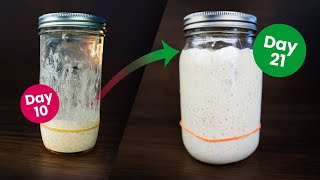
Feeding a sourdough starter keeps the yeast and bacteria active so it can leaven bread for years. This guide walks you through the first feed after a starter arrives and the follow-up feeds that bring it back to full strength. It suits new bakers and needs only flour, warm water and a bowl.
YouTube video: How to feed a sourdough starter
YouTube’s video details do not confirm captions. Check CC in the player for available tracks.
- Video length
- 2 min 17 s
- Time to do it
- 30 minutes plus 12 to 16 hours
- Difficulty
- Easy
- Steps
- 9
What you need
Steps
Add 1/4 cup warm water to the starter container and stir to loosen the starter from the sides.
Pour the loosened starter into a clean bowl.
Add 1 1/4 cups water and 2 cups all-purpose flour. Stir until combined.
Cover the bowl and let the starter develop at cool room temperature, 68 to 70°F, for 8 to 12 hours.
Move half of the starter to a clean bowl. Discard the rest or give it to a friend.
Add 1/2 cup warm water and 1 cup all-purpose flour to the half. Stir to combine and let it sit 2 to 4 hours, until bubbles show again.
Divide the starter in half again. Discard or share one half, then feed the other with 1/2 cup warm water and 1 cup all-purpose flour.
Cover and rest at room temperature for another 2 to 4 hours. The starter is now healthy and ready to use.
Store any starter you are not using right away in the refrigerator.
Tips and common mistakes
Use warm, not hot, water so you do not kill the wild yeast.
Keep the bowl covered during rests to stop the surface from drying out.
Discarding half each time keeps the starter from growing too large and sour.
A starter that shows no bubbles after the rest may need a warmer spot.
Questions
How often should I feed my sourdough starter?
Feed it each time you bake, and refresh a refrigerated starter with the same flour and water amounts before you use it again.
Can I skip the discarding step?
You can give the extra starter to a friend or use it in pancakes and crackers, but discarding keeps the feed ratios balanced.
What temperature is best for the starter?
Cool room temperature of 68 to 70°F works well. Warmer spots speed up bubbling, cooler spots slow it down.
The notes are drafted automatically from video details and general task knowledge. How the guide was prepared
Report a correction