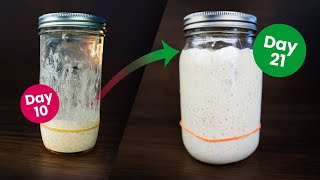
Feeding at 1:5:5 means one part starter to five parts flour and five parts water. This ratio suits bakers who want a slower, bigger rise, such as when leaving the starter for longer or baking in a warm kitchen. You need a digital scale, a jar, flour and water.
YouTube video: How to feed your sourdough starter a 1:5:5 ratio!
YouTube’s video details do not confirm captions. Check CC in the player for available tracks.
- Video length
- 1 min 2 s
- Time to do it
- 5 minutes
- Difficulty
- Easy
- Steps
- 7
What you need
Steps
Weigh your empty jar on the scale and note the weight, or use the tare button to reset it to zero.
Add 1 part active starter by weight, for example 10 g, and note the number.
Add 5 parts flour by weight, so 50 g for a 10 g starter.
Add 5 parts water by weight, so 50 g for a 10 g starter.
Stir everything together until no dry flour is left and the mixture is smooth.
Scrape down the sides, cover the jar loosely and mark the starting level on the outside.
Leave it at room temperature until it has risen and looks bubbly, then use or refrigerate it.
Tips and common mistakes
Weigh everything rather than using cups, since the ratio only works by weight.
A 1:5:5 feed rises more slowly than a 1:1:1 feed, so do not panic if nothing happens for a few hours.
Use room temperature water and keep the jar out of cold drafts for a steady rise.
Questions
What does 1:5:5 mean?
It means one part starter to five parts flour and five parts water, all measured by weight. For example, 10 g starter, 50 g flour and 50 g water.
When should I use a 1:5:5 feed?
Use it when you want a slower rise or a larger feed, such as before a long break or in a warm kitchen. For a quick daily feed, a smaller ratio like 1:1:1 is common.
How do I know the starter is ready?
It should look bubbly, smell pleasantly sour and have risen above the mark you made on the jar. Feed it again when it starts to fall.
The notes are drafted automatically from video details and general task knowledge. How the guide was prepared
Report a correction