Drawing Perspective Without Being Perfect, by Proko on YouTube. 10 min 13 s.
- Video length
- 10 min 13 s
- Time to do it
- 30 minutes
- Difficulty
- Medium
- Steps
- 9
What you need
Steps
Warm up by drawing simple boxes, cylinders and spheres from different angles. Keep the lines light so you can adjust them later.
Pick a reference pose and sketch the whole figure as a few loose shapes. Do not lock in details yet.
Place the figure inside a simple ground plane or box so you can see which way the body faces in space.
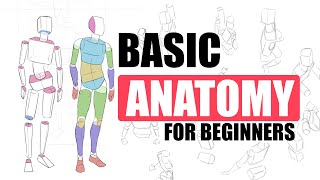
Draw the ribcage and pelvis as tilted boxes. Match their angles to the pose instead of forcing them upright.
Add cross contour lines around the limbs and torso to show the form turning in depth.
Check foreshortening by comparing near and far body parts. Make the closer parts larger and overlap the far ones.
Measure proportions with your pencil or by comparing head lengths. Fix any part that looks too long or short.
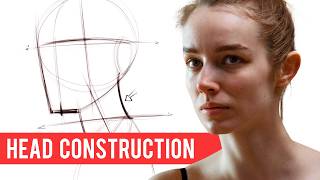
Build the head from a sphere and a jaw shape, then place the features along the center line and eye line.
Refine the drawing with darker lines on the closest edges and lighter lines on the far side.
Tips and common mistakes
Keep your construction lines light until the pose feels right, then commit with darker strokes.
Use overlapping shapes to show depth instead of drawing every contour perfectly.
Check your drawing in a mirror to spot proportion errors you stop seeing while working.
Questions
Do I need to know formal perspective rules first?
No. Basic one and two point perspective helps, but the point is to use it loosely as a guide, not to build a perfect grid.
How do I stop my figures looking stiff?
Start with gesture and loose shapes before adding boxes. Only tighten the construction once the pose reads clearly.
What should I practice first?
Draw tilted boxes and cylinders from life or photos. That skill carries straight into the ribcage, pelvis and limbs.
This guide was drafted from the video's details and general task knowledge. It has not been checked against the full video. Check the video and relevant product instructions before following a procedure. Report a correction.