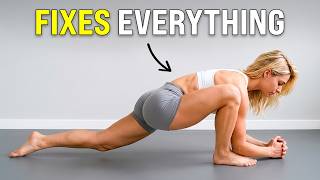
Five simple hamstring stretches you can do standing, kneeling or lying down with a resistance band. They suit anyone with tight hamstrings from long sitting, and work well after a run or workout. Move slowly and stop if you feel sharp pain.
YouTube video: 5 Hamstring Stretches for Tight Hamstrings
Captions are available. Use CC in the YouTube player.
Choose a chapter (11)
- Video length
- 6 min 53 s
- Time to do it
- 10 minutes
- Difficulty
- Easy
- Steps
- 8
What you need
Steps
Warm up briefly with a short walk or gentle leg swings before you start stretching.
Stand tall and roll down slowly toward your toes, letting your spine and hamstrings lengthen. Hold for a few breaths, then roll back up.
Repeat the roll-down with your legs crossed, which shifts the stretch slightly. Switch the crossed leg on the next round.
Lie on your back and loop the resistance band around one foot. Keep the leg straight and gently pull the band to raise the leg until you feel a stretch.
Place one foot on a chair with the leg straight. Hinge forward from the hips over that leg and hold.
Do a squat with one leg straight out in front, keeping the other knee bent. Keep your back flat as you lower.
Choose a static hold or a gentle dynamic movement for each stretch, depending on what feels better.
Breathe steadily and stop any stretch that causes sharp or lasting pain.
Tips and common mistakes
Hold each static stretch for about 20 to 30 seconds and repeat two to three times.
Keep your back straight and hinge from the hips rather than rounding your spine.
Don't bounce hard into a stretch, especially if you feel it in your lower back.
See a professional if tightness or pain persists despite regular stretching.
Questions
How often should I stretch tight hamstrings?
Aim for most days, especially after sitting for long periods or after a run. Consistency matters more than long sessions.
Do I need a resistance band?
Only for the lying stretch. You can use a towel or strap instead if you don't have a band.
Should I do static or dynamic stretches?
Use dynamic movement before exercise and static holds after, when your muscles are warm.
The notes are drafted automatically from video details and general task knowledge. How the guide was prepared
Report a correction