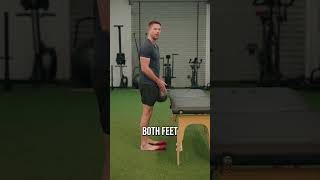
Why Your Hip Hinge Feels Off (4 Common Cheats), by OPAL Movement Therapy on YouTube. 10 min 55 s.
- Video length
- 10 min 55 s
- Time to do it
- 15 minutes
- Difficulty
- Easy
- Steps
- 8
What you need
Steps
Stand with feet hip-width apart, knees soft and ribs stacked over your pelvis. Push your hips back while your chest tips forward, keeping your spine long.
Check the first cheat: bending only at the back with no hip movement. Aim to send your butt back first so the fold happens at the hip crease, not the waist.
Avoid slamming your shins backward. Let your knees stay soft and roughly over your feet while your hips travel back.
Stop overextending at the top. Finish standing tall with ribs down and glutes gently squeezed, not with an arched lower back.
Keep your neck neutral. Let your gaze follow the floor a few feet ahead instead of craning your head up to look forward.
Practice the wall drill: stand about a foot from a wall, hinge back until your butt taps it, then return. Keep your back flat and repeat 10 slow reps.
Use a dowel along your back, touching your head, upper back and tailbone. Hinge while keeping all three contact points, for 8 to 10 reps.
Add load only when the pattern feels smooth. Try a light dumbbell or kettlebell and keep the same hip-back motion for 3 sets of 8.
Tips and common mistakes
Film yourself from the side so you can see whether your hips move back or your back just rounds.
If your lower back feels it more than your hamstrings, slow down and reduce the range.
Keep the movement small at first; a shallow clean hinge beats a deep sloppy one.
Stop if you feel sharp pain and check with a physio or doctor before loading the lift.
Questions
How far back should my hips go?
Only as far as you can keep a long, neutral spine. Range grows with practice, so stop before your back rounds.
Should my knees bend during a hip hinge?
Yes, slightly. They stay soft and roughly over your feet while most of the motion comes from your hips going back.
Can I do this without weights?
Yes. The wall drill and dowel drill work with bodyweight alone and are a good warm-up before deadlifts or RDLs.
This guide was drafted from the video's details and general task knowledge. It has not been checked against the full video. Check the video and relevant product instructions before following a procedure. Report a correction.