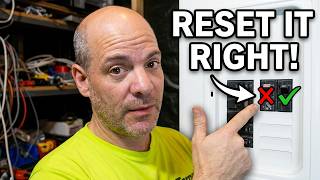
Your Breaker Keeps Tripping Don't Replace It Until You Know This Common fault + costly mistake, by Build Autopsy on YouTube. 16 min 26 s.
- Video length
- 16 min 26 s
- Time to do it
- 30 minutes
- Difficulty
- Medium
- Steps
- 9
What you need
Steps
Reset the breaker once by pushing the handle fully to OFF, then firmly to ON. If it holds, note the time and what was running.
Write down the trip pattern. A trip after minutes of heavy use points to an overload. An instant trip points to a short, ground fault or arc fault.
Unplug appliances and devices on that circuit one at a time, then reset. If the breaker holds with an item unplugged, that item or its cord is suspect.
Check cords and plugs for damage, scorch marks or a loose fit. Replace damaged cords and stop using the appliance until it is repaired.
Look and listen at outlets and switches on the circuit. Flickering, buzzing, warmth, discoloration or a burning smell means stop and call an electrician.
Add up the load on the circuit. Heaters, kettles, hair dryers and power tools draw a lot. Move some to another circuit instead of running them together.
Check whether the tripped device is a GFCI or AFCI breaker or outlet. Press its test and reset buttons, since these trip for ground and arc faults, not just overload.
Never fit a bigger breaker to stop trips. The breaker must match the wire size, and a larger one can overheat the wiring.
If the breaker trips again with nothing plugged in, or trips instantly, stop resetting it and call a licensed electrician.
Tips and common mistakes
Do not keep resetting a breaker that trips straight away. Each reset pushes current through a fault and can make it worse.
A breaker that is warm, smells burnt or will not stay on needs a professional, not a DIY swap.
Breakers must match the panel brand and model. A wrong breaker can sit loose and overheat.
If one circuit always trips, ask an electrician whether it needs to be split into a dedicated circuit.
Questions
Does a tripping breaker mean the breaker is bad?
Usually not. Overloads, damaged cords, short circuits and ground faults are more common causes. The breaker is often doing its job by cutting power.
Can I just install a bigger breaker?
No. The breaker size must match the wire size. A bigger breaker lets too much current flow and can overheat the wiring and start a fire.
When should I call an electrician?
Call one if the breaker trips with nothing plugged in, trips instantly, or you see heat, buzzing, scorch marks or a burning smell. These are signs of a fault inside the wiring.
This guide was drafted from the video's details and general task knowledge. It has not been checked against the full video. Check the video and relevant product instructions before following a procedure. Report a correction.