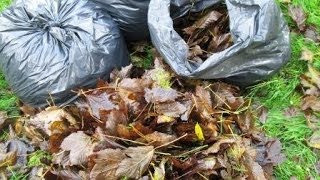
You can turn a pile of autumn leaves into crumbly leaf mould compost without buying anything. This suits any gardener with a few bags of leaves and a corner of the yard. The main requirement is patience, since the pile needs moisture and a few turns across the cold months.
YouTube video: How to Compost Fall Leaves in Winter (5 Easy Steps, 18 Days)
Caption availability is unknown. Check the CC control in the YouTube player.
- Video length
- 17 min 47 s
- Time to do it
- 30 minutes plus 2 to 12 months
- Difficulty
- Easy
- Steps
- 8
What you need
Steps
Rake the fallen leaves into a pile. Keep them dry if you can, and skip leaves that are soaked or mixed with rubbish.
Run the mower over the pile to shred the leaves. Smaller pieces break down much faster than whole leaves.
Fill black bin bags about three quarters full, or heap the leaves into a wire bin. Pack them loosely, not tight.
Add a splash of water and shake or turn the leaves. They should feel damp like a wrung-out sponge, not dripping.
Tie the bags loosely or cover the bin. Poke a few holes in the bags so air can get in.
Store the bags or bin out of direct sun, behind a shed or against a wall. Winter cold slows but does not stop the process.
Check every few weeks. Turn the leaves with a fork and add water if the pile has dried out.
Use the leaf mould when it turns dark, crumbly and smells earthy. This can take 2 months in a warm spot or up to a year in cold weather.
Tips and common mistakes
Shredded leaves break down far faster than whole ones, so mowing is worth the extra few minutes.
Avoid adding thick evergreen leaves or walnut leaves in large amounts, as they rot slowly.
If the bags smell sour or slimy, open them and turn the leaves to let air in.
Questions
Can I compost leaves in winter when it freezes?
Yes. The cold slows the process but the leaves keep breaking down. Keep the pile damp and turn it when the weather allows.
Do I need to add other materials to the leaves?
Not for leaf mould. Leaves alone make a fine soil conditioner. If you want richer compost, mix in grass clippings or kitchen scraps.
How do I know the leaf mould is ready?
It should be dark brown, crumbly and smell like forest soil. If you can still see whole leaf shapes, leave it longer.
The notes are drafted automatically from video details and general task knowledge. How the guide was prepared
Report a correction