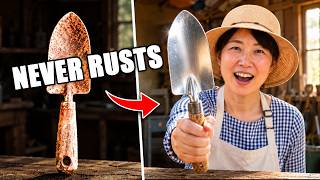
Bring tired spades, forks and secateurs back to life with soapy water, white vinegar and boiled linseed oil. This suits anyone with rusty hand tools and a free afternoon. You only need a few cheap household items and a dry space to work in.
YouTube video: How I Clean, De-Rust & Restore My Garden Tools | Easy Winter Garden Maintenance
Caption availability is unknown. Check the CC control in the YouTube player.
- Video length
- 20 min 48 s
- Time to do it
- 1 to 2 hours plus soaking time
- Difficulty
- Easy
- Steps
- 8
What you need
Steps
Fill a bucket with warm water and a good squirt of washing up liquid. Scrub each tool with a stiff brush to remove soil, sap and mud, then rinse.
Dry every tool straight away with a cloth. Water left on metal is what starts rust, so do not leave them to air dry.
For light rust, scrub the metal with steel wool or fine sandpaper until the surface is clean and shiny.
For heavier rust, place the metal heads in a tray or bucket and cover them with white vinegar. Leave them to soak for a few hours, checking every hour.
Take the tools out of the vinegar and scrub off the softened rust with a wire brush or steel wool. Rinse and dry thoroughly.
Sharpen secateurs and hand tools by running a sharpening stone or file along the blade at the original angle, a few strokes per side.
Wipe a thin coat of boiled linseed oil over wooden handles and rub it in with a cloth. Leave to dry before use.
Wipe a light film of oil over the metal blades and heads to protect them from rust, then store the tools somewhere dry.
Tips and common mistakes
Do not leave tools in vinegar for days, as it can pit the metal, so check them regularly.
Wear gloves when handling vinegar, rusty edges and sharpening tools.
Rags soaked in boiled linseed oil can heat up and catch fire, so spread them out flat to dry or bin them safely.
Clean and oil your tools at the end of each season rather than waiting for heavy rust to build up.
Questions
Can I use malt vinegar instead of white vinegar?
White vinegar works best because it is clear and cheap. Other vinegars will still soften rust but may leave stains or smell stronger.
How often should I oil wooden handles?
Once or twice a year is enough for most garden tools. Reapply when the wood looks dry or pale.
Do I need to sharpen every tool?
Only blades need sharpening, such as secateurs and hoes. Spades and forks just need cleaning and oiling.
The notes are drafted automatically from video details and general task knowledge. How the guide was prepared
Report a correction