Writing like a researcher, Part 1: Citations, by Proadpran Punyabukkana on YouTube. 22 min 41 s.
- Video length
- 22 min 41 s
- Time to do it
- 25 minutes
- Difficulty
- Easy
- Steps
- 9
What you need
Steps
Learn four terms first: citation, in-text citation, reference list and paraphrase. Knowing them makes the rest of the process easier to follow.
Cite every source whose words or ideas you use. A citation gives the original author credit and keeps you clear of plagiarism.
Rewrite borrowed ideas in your own words instead of pasting the original text. If you keep the exact wording, put it in quotation marks and cite it.
Place the citation where the borrowed idea sits, usually at the end of the sentence or just after the author's name. Do not save all citations for the last paragraph.
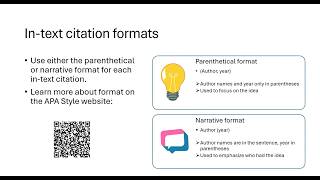
Pick one style for the whole paper. Numerical styles like IEEE use bracketed numbers such as [1], while author-year styles name the author and year.
Make each in-text citation point to exactly one entry in the reference list. The name or number must match the entry word for word.
Write each reference entry with author, title, source, year and pages or DOI, in the order your style guide asks for.
Connect a reference manager to your editor so citations and entries are generated and renumbered automatically as you write.
Export your library as BibTeX and compare the formatted output with your style guide before you submit the paper.
Tips and common mistakes
Keep one style throughout, since mixing IEEE numbers with author-year citations looks careless.
Every reference list entry needs an in-text citation, and every in-text citation needs an entry.
Recheck page numbers and DOIs last, as these are the details most often wrong in reference lists.
Paraphrasing still needs a citation. Changing the words does not remove the debt to the author.
Questions
Do I have to cite an idea I put in my own words?
Yes. Paraphrased ideas still come from another author, so cite them the same way you would a direct quote.
How do I know which citation style to use?
Check your course or journal instructions. Computer science papers often use IEEE or ACM, while other fields use APA.
What is BibTeX for?
BibTeX stores your references in a plain text file so a LaTeX editor can format the citations and the reference list for you.
This guide was drafted from the video's details and general task knowledge. It has not been checked against the full video. Check the video and relevant product instructions before following a procedure. Report a correction.