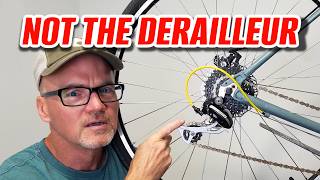
Most riders destroy the drivetrain by “cleaning” it wrong, by Bulletproof Cycling on YouTube. 1 min 5 s.
- Video length
- 1 min 5 s
- Time to do it
- 10 minutes
- Difficulty
- Easy
- Steps
- 8
What you need
Steps
Clean the chain with a rag first. Wipe off grit and old lube so the gauge sits flat against the links and gives a true reading.
Pick the right gauge setting. Most checkers have a 0.5 percent side for 11 and 12 speed chains and a 0.75 percent side for older, wider chains.
Fit the gauge into the chain. Drop the first pin into a link roller, then let the second pin rest on the next roller a few links along.
Read the result. If the second pin drops fully between the rollers, the chain has reached that wear limit and needs replacing.
Check a second spot. Rotate the cranks a quarter turn and repeat, since wear can vary around the chain.
Replace the chain if it fails the check. A worn chain quickly ruins the cassette and chainrings, which cost far more than a new chain.
Lube the chain after cleaning. Apply a drop to each roller, wipe off the excess, and let it soak in before you ride.
Store the bike dry. Dry the chain after a wet ride and add lube so it does not sit away wet and rust.
Tips and common mistakes
Too much washing strips the lube out of the rollers, so clean gently and relube every time.
Too little lubrication wears the chain fast, so check it regularly rather than only after a wash.
Measure at several points on the chain, because a single reading can miss a worn section.
Questions
How often should I check my chain?
Check it every few hundred kilometres, or roughly once a month for regular riders. Check sooner if you ride in rain or grit.
What wear percentage means I need a new chain?
Many riders replace at 0.5 percent on 11 and 12 speed setups and at 0.75 percent on older drivetrains. Follow your gauge and bike maker's guidance.
Can I reuse the old chain after checking?
Yes, if it passes the check. Clean and relube it and keep riding, then check again in a few weeks.
This guide was drafted from the video's details and general task knowledge. It has not been checked against the full video. Check the video and relevant product instructions before following a procedure. Report a correction.