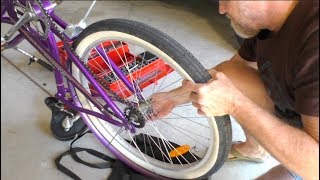
Learn to measure chain wear so you replace the chain before it damages your cassette and chainrings. This suits any rider with a derailleur-geared bike and a chain wear tool or a ruler. A worn chain stretches, shifts poorly and wears out costly drivetrain parts.
YouTube video: When to Replace a Chain on a Bicycle
Captions are available. Use CC in the YouTube player.
- Video length
- 4 min 23 s
- Time to do it
- 10 minutes
- Difficulty
- Easy
- Steps
- 7
What you need
Steps
Put the bike in a repair stand or hold it upright so you can turn the cranks freely.
Wipe the chain with a rag so grit does not skew your measurement.
Fit a chain wear indicator into the chain and let it drop between the rollers.
Read the tool. If it drops fully into the chain, the chain is worn and needs replacing.
With a ruler, measure 12 inches along the chain from a pin and check how far the pins have stretched.
Compare your reading to a chain wear chart for your speed of chain and replace it once it passes the limit.
Check the chain again every few rides, and sooner after riding in rain or grit.
Tips and common mistakes
A stretched chain wears the cassette and chainrings, so replacing it early saves money.
Measure at several points along the chain because wear is not always even.
Use the wear limit for your chain type, since wider single speed chains last longer than narrow multi speed chains.
Questions
How often should I check my chain?
Check it every few rides, and always after wet or gritty rides. A quick tool check takes under a minute.
Can I keep riding a worn chain?
Only briefly. A worn chain shifts badly and grinds down the cassette and chainrings, which cost more to replace than a chain.
Do I need a special tool?
A chain wear indicator makes it quick, but a ruler works too. Measure 12 inches of chain and compare the stretch to the limit for your chain.
The notes are drafted automatically from video details and general task knowledge. How the guide was prepared
Report a correction