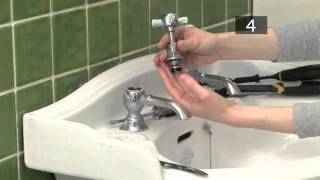
Swap a faulty thermostatic radiator valve (TRV) on a sealed heating system without draining the whole circuit. It suits confident DIYers who can work carefully around water and a pressurised system. You need a replacement TRV, a radiator valve change kit with bungs, and spanners.
YouTube video: How to Change a Thermostatic Radiator Valve Without Draining The System
YouTube’s video details do not confirm captions. Check CC in the player for available tracks.
- Video length
- 14 min 53 s
- Time to do it
- 45 minutes
- Difficulty
- Medium
- Steps
- 8
What you need
Steps
Turn the heating off at the boiler and let the radiators cool completely. Close the TRV on the radiator and close the lockshield valve on the other end.
Count the turns as you close the lockshield valve so you can set it back the same way. This keeps the radiator balanced.
Fit the bungs into the feed and expansion tank, or use the kit method for your sealed system, to stop water flowing while you work.
Crack open the nut on the old TRV with a spanner and let any trapped water drip into a bucket and towels.
Remove the old valve body from the radiator tail and the pipe. Clean the threads and wrap PTFE tape around them.
Fit the new TRV body onto the radiator tail and pipe, then tighten the nuts firmly by hand and finish with a spanner.
Remove the bungs and reopen the lockshield valve the same number of turns. Open the TRV and check every joint for leaks.
Bleed the radiator with a radiator key, then check the boiler pressure and top it up if it has dropped.
Tips and common mistakes
Work with cool water only, since hot water from a radiator can scald.
Do not overtighten the nuts or you can damage the olive and cause a leak.
Keep a bucket and towels under the valve at all times, as some water always escapes.
If a joint keeps weeping after tightening, wrap more PTFE tape and refit it.
Questions
Can I do this on a combi boiler system?
Check the instructions for your exact model before choosing this setting or amount. On a pressurised combi system, close the valves and release pressure carefully first.
Do I need to drain the whole radiator?
No. Closing both valves and using bungs traps the water so you only deal with a small amount at the valve.
How do I stop the radiator knocking afterwards?
Bleed the radiator and check the lockshield is set back to its original turns. Trapped air and a badly balanced valve are common causes of knocking.
The notes are drafted automatically from video details and general task knowledge. How the guide was prepared
Report a correction