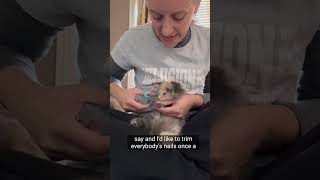
Brushing keeps your cat's coat clean and reduces hairballs, but many cats resist it. This guide shows you how to build a calm brushing routine with short sessions, treats and the right brush, so even a reluctant cat learns to accept it.
YouTube video: Top TIPS for Brushing Your Cat (even if they hate it)
Caption availability is unknown. Check the CC control in the YouTube player.
Choose a chapter (7)
- Video length
- 12 min 44 s
- Time to do it
- 10 minutes
- Difficulty
- Easy
- Steps
- 8
What you need
Steps
Pick a quiet time when your cat is relaxed, such as after a meal or a nap. Sit on the floor so you are at their level.
Let your cat sniff the brush first. Give a treat and a chin scratch so the brush becomes a normal, safe object.
Start with one or two gentle strokes along the back, in the direction the fur grows. Stop before your cat gets restless.
Reward right after each short session with a treat. Keep sessions to a minute or two at first.
Watch for the tail flicking, ears flattening or skin rippling. These are signals to stop and try again later.
Drop any routine that stresses your cat, like holding them down or brushing in a fixed spot they dislike.
Increase the number of strokes slowly over days. Work up to brushing the sides, belly and legs as trust grows.
Choose the right brush for the coat. Use a slicker or metal comb for long hair and a rubber curry brush for short hair.
Tips and common mistakes
Never force a brushing session. A bad experience sets you back more than a skipped day.
Brush in the direction of the fur and be gentle around the belly and hind legs, where cats are most sensitive.
Long-haired cats need brushing several times a week to prevent mats, which can pull on the skin.
If you find hard mats, do not cut them with scissors. Ask a vet or groomer to remove them safely.
Questions
How often should I brush my cat?
Short-haired cats usually do well with a brush once or twice a week. Long-haired cats need it several times a week to stop tangles and mats.
My cat bites the brush. What should I do?
Shorten the sessions and reward sooner. One gentle stroke followed by a treat is a good start, then build up slowly over a few weeks.
Can brushing replace a vet visit for mats?
No. Tight mats close to the skin can hurt and hide skin problems, so have a vet or professional groomer handle those.
The notes are drafted automatically from video details and general task knowledge. How the guide was prepared
Report a correction