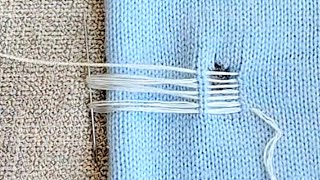
You will learn to shorten dress pants or a skirt by hand so no stitches show on the outside. It suits beginners who own a needle and thread but no sewing machine. All you need is a pressed hem fold, matching thread and a little patience.
YouTube video: Blind Hem Stitch by Hand | Invisible Hemming Tutorial
Caption availability is unknown. Check the CC control in the YouTube player.
- Video length
- 1 min 14 s
- Time to do it
- 30 minutes
- Difficulty
- Easy
- Steps
- 8
What you need
Steps
Try the garment on and pin the new hem length. Take it off and cut the excess fabric, leaving about 4 cm (1.5 inches) for the hem allowance.
Turn the garment inside out. Fold the hem allowance up and press the fold flat with a hot iron set for the fabric.
Thread the needle with a single strand of thread and tie a small knot at the end. Anchor the knot inside the hem allowance, not on the outer fabric.
Work from the inside. Bring the needle up through the folded edge of the hem allowance, then take a tiny bite of just one or two threads of the main garment directly above the fold.
Push the needle back into the hem fold and slide it along inside the fold for about 1 cm (half an inch). Take a slightly bigger stitch through the hem allowance.
Repeat this pattern: tiny bite in the garment, longer stitch in the hem fold. Keep the stitches about 1 cm apart and do not pull the thread tight.
Finish with a small knot hidden inside the hem allowance. Trim the thread.
Press the hem again from the inside with a damp cloth over it. The stitches will sink into the fabric and disappear.
Tips and common mistakes
Keep the thread loose so the hem stretches with the fabric instead of puckering.
Pick thread a shade darker than the fabric; it hides better than a lighter match.
Catch only one or two threads of the outer fabric, or the stitch will show through.
Press the hem before you sew, since a sharp crease makes the tiny bites much easier.
Questions
Can I do a blind hem without a sewing machine?
Yes. The hand version uses a needle and thread only, and the stitches sit inside the hem fold so they stay hidden.
What fabric works best for a blind hem?
Wool, cotton and blends with some body hold the crease well. Very stretchy or slippery fabrics are harder to keep invisible.
How long should the hem allowance be?
About 4 cm (1.5 inches) is a good working size. Anything under 2 cm is fiddly to fold and stitch by hand.
The notes are drafted automatically from video details and general task knowledge. How the guide was prepared
Report a correction