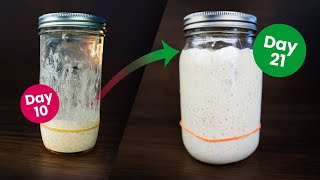
You will mix a simple sourdough dough, fold it, shape it, chill it overnight and bake it in a hot Dutch oven for a crisp crust and open crumb. It suits bakers who already have a live starter and a kitchen scale. You need about a day of waiting, though most of it is hands-off.
YouTube video: Full Step-by-Step Sourdough Bread-Making Process 🌾🥖
Caption availability is unknown. Check the CC control in the YouTube player.
- Video length
- 1 min 1 s
- Time to do it
- 1 day
- Difficulty
- Medium
- Steps
- 10
What you need
Steps
Feed your starter so it peaks before you mix. In the morning use a 1:1:1 ratio of starter, water and flour about 5 to 6 hours ahead, or feed at 1:5:5 the night before.
Weigh 315 g all-purpose flour, 35 g whole emmer flour, 240 g water, 175 g bubbly starter and 8 g salt into a bowl. Mix until no dry flour is left, cover and rest 1 hour.
Do three sets of coil folds, one every 60 minutes. Let the dough relax fully between sets before you start the next one.
Leave the dough to rest another 60 to 90 minutes after the last fold. It should look puffy and hold its shape when you lift it.
Shape the dough into a batard or a boule on a lightly floured bench. Place it seam-side up in a floured proofing basket.
Cover the basket and put it in the fridge for 16 hours, or overnight.
Heat the oven to 250°C (482°F) with the Dutch oven and lid inside for at least 30 minutes.
Turn the dough onto parchment paper, seam-side down, and score the top with a blade or sharp knife.
Lower the oven to 230°C (446°F). Bake covered for 20 minutes, then remove the lid and bake 15 to 20 minutes at 200°C (392°F) until golden brown.
Lift the loaf onto a rack and let it cool completely before slicing.
Tips and common mistakes
Fermentation runs faster in a warm kitchen, so judge the dough by how puffy it looks rather than the clock alone.
Use a dry cloth or oven gloves when you handle the preheated Dutch oven, and never put a cold wet towel on it.
Slash the dough about 1 cm deep at a shallow angle so the loaf opens instead of tearing.
If you have no emmer flour, swap in the same weight of whole wheat or more all-purpose flour.
Questions
Can I bake this without a Dutch oven?
Yes. Preheat a baking stone or steel to 250°C, bake with steam for 20 minutes at 230°C, then release the steam and finish 15 to 20 minutes at 200°C.
How do I know my starter is ready?
It should be doubled, domed and full of bubbles, and a spoonful should float in water. Feed it again if it smells sharp or looks flat.
Why did my loaf come out flat?
The dough was probably over-proofed or shaped too loosely. Shorten the warm fermentation in hot weather and build a tighter shape before chilling.
The notes are drafted automatically from video details and general task knowledge. How the guide was prepared
Report a correction