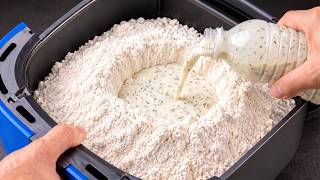
Full bread-making process from start to finish 🤤 Recipe 👇🏻, by Not Only BREAD on YouTube. 1 min.
- Video length
- 1 min
- Time to do it
- 1 day plus overnight proof
- Difficulty
- Medium
- Steps
- 10
What you need
Steps
Feed your starter and wait until it is at peak, strong and bubbly. Use a 1:1:1 ratio about 5 to 6 hours before mixing, or a 1:5:5 ratio the night before.
Weigh 246 g water, 175 g starter, 315 g wheat flour, 35 g rye flour and 8 g salt into a bowl. Mix until no dry flour remains, then cover and rest for 1 hour.
Do the first coil fold: lift one side of the dough, stretch it up and fold it over the middle. Turn the bowl and repeat around the dough.
Cover and wait 60 minutes, then do a second set of coil folds. Wait another 60 minutes and do a third set.
After the last fold, let the dough rest 60 to 90 minutes at 22 to 23°C until puffy and slightly jiggly.
Turn the dough onto a lightly floured surface and shape it into a batard or boule. Keep tension on the surface as you shape.
Flour your proofing basket, place the dough seam-side up, cover and refrigerate for 16 hours.
Heat the oven with the Dutch oven inside to 250°C (482°F). Turn the cold dough onto parchment, seam-side down, and score one deep slash.
Lower the oven to 230°C (446°F), bake covered for 20 minutes, then remove the lid and bake 15 to 20 minutes at 200°C (392°F) until golden brown.
Lift the bread out and cool it completely on a wire rack before slicing.
Tips and common mistakes
Fermentation runs faster in a warm kitchen, so judge the dough by feel and puffiness rather than the clock alone.
Let the dough relax fully before each coil fold so you do not tear the gluten.
Use oven gloves and keep your face back when you lift the hot Dutch oven lid, since steam rushes out.
If you bake on a stone, add steam for the first 20 minutes and vent it before the final browning stage.
Questions
Can I skip the rye flour?
Yes, you can replace it with the same weight of wheat flour. The rye adds flavour and helps fermentation, so the loaf will taste a little milder.
Why is my dough not rising during bulk fermentation?
Your starter may not be at peak or your room may be too cold. Move the bowl somewhere warmer and wait longer, checking for puffiness and bubbles.
Do I have to cold proof overnight?
It is not strictly required, but the 16 hours in the fridge firm up the dough and make scoring easier. Skipping it will change the flavour and shape.
This guide was drafted from the video's details and general task knowledge. It has not been checked against the full video. Check the video and relevant product instructions before following a procedure. Report a correction.