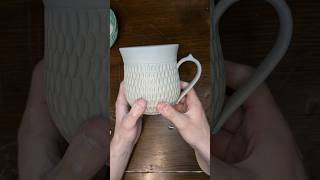
You will score and slip a leather-hard clay handle onto a leather-hard mug, press it gently, blend the seam, and dry the piece slowly. It suits beginner potters who already have a mug body and a pulled or cut handle. Keep both parts at a similar moisture level for a strong join.
YouTube video: How to Attach a Ceramic Mug Handle
Caption availability is unknown. Check the CC control in the YouTube player.
Choose a chapter (6)
- Video length
- 9 min 5 s
- Time to do it
- 20 minutes plus drying time
- Difficulty
- Medium
- Steps
- 9
What you need
Steps
Let your mug and handle firm up to leather-hard. The clay should hold its shape but still feel cool and slightly damp, not sticky.
Choose a handle shape that feels comfortable in your hand and suits the mug. Check the length and curve before you commit.
Score the attachment spots on the mug and both ends of the handle with a needle tool or fork. Make shallow crosshatch marks.
Brush or dab thick slip onto both scored areas. Slip is clay mixed with water to a creamy paste, not thin muddy water.
Press one handle end onto the mug and rock it gently to push out air. Support the mug wall from inside with your other hand.
Attach the lower end the same way and check the handle from the front and side. Adjust the curve before the clay firms.
Blend the seam with a damp sponge or your finger, working in small strokes. Keep the joint smooth and full, not flattened.
Wrap the mug loosely in a plastic bag and let it dry slowly for a few days. Unwrap it for short periods so air can reach it.
Clean up any sharp bits with a damp sponge, then bisque fire the mug when it is fully dry.
Tips and common mistakes
Attach the handle when both parts are leather-hard, because very wet clay sags and bone-dry clay cracks.
Keep a finger inside the mug behind the joint so you can press firmly without denting the wall.
Score and slip both surfaces, not just the mug, or the handle can pop off later.
Point sharp needle tools away from your hand and cut on a scrap tile or board.
Questions
How do I know the clay is leather-hard?
It holds its shape, feels cool and slightly damp, and resists a fingerprint. If it is sticky, let it firm up; if it is pale and dry, dampen it slowly.
Can I attach a handle to a wet mug?
It is possible, but the handle may sag and the join can slump. Leather-hard clay gives a cleaner, stronger join.
How long should the mug dry before firing?
Let it dry slowly until it feels dry and room temperature, often a few days. Rushing the drying can cause cracks at the handle seam.
The notes are drafted automatically from video details and general task knowledge. How the guide was prepared
Report a correction