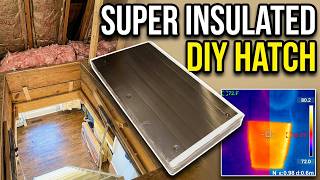
An unsealed attic hatch or pull-down ladder lets warm air escape and cold air in. This guide shows you how to seal the frame with weatherstripping and foam, then fit a rigid insulation cover over the opening. It suits any DIYer with basic tools and works best on a folding wooden ladder hatch.
YouTube video: How To Air Seal & Insulate Attic Access Ladders! #airseal #energyefficiency #atticladder #carpenter
Caption availability is unknown. Check the CC control in the YouTube player.
- Video length
- 1 min 30 s
- Time to do it
- 2 hours
- Difficulty
- Medium
- Steps
- 8
What you need
Steps
Open the ladder and check the frame for gaps between the wood and the drywall or ceiling joists. Look for daylight and drafts around all four sides.
Fill larger gaps between the frame and ceiling with spray foam or caulk. Let it cure fully before you keep working.
Stick weatherstripping or foam gasket tape along the top edge of the frame where the hatch panel or ladder door rests. Press it down firmly so it seals all the way around.
Measure the opening and cut a piece of rigid foam board to fit snugly inside the frame. Cut it slightly oversize so it wedges in place.
Glue a second layer of foam board to the first for extra R-value, or use one thick 2 inch board. Let the adhesive set.
Build a simple box cover from foam board or plywood that sits over the opening on top of the gasket. Make it deep enough to clear the folded ladder.
Attach a handle to the cover so you can lift it from below. Screw or glue it to the top face.
Close the ladder and set the cover in place. Check that it sits flat on the weatherstripping with no gaps. Add a latch or hook if it lifts easily.
Tips and common mistakes
Wear safety glasses and a dust mask when cutting foam board and working overhead.
Never block the ladder's folding path or the hatch opening with insulation that could fall.
Test the seal on a cold windy day by feeling for drafts around the closed hatch.
Use foil-faced foam board to add a radiant barrier and keep moisture out.
Questions
Do I need to remove the old insulation first?
Only if it is damaged, wet or blocking the frame. Otherwise leave it and seal around the edges of the opening.
Will a cover make the attic too hot?
No. The cover seals the hatch from the living space, which keeps your home warmer in winter and cooler in summer.
Can I use fiberglass batts instead of foam board?
Foam board works better for a hatch cover because it is rigid and easy to lift. Batts are soft and can sag into the opening.
The notes are drafted automatically from video details and general task knowledge. How the guide was prepared
Report a correction